
MANUAL
Document Version 1.0.0
Product Version 1.0.0
© by SONUSCORE
SYSTEM REQUIREMENTS
For latest system requirements, please visit www.sonuscore.com, or your trusted dealer's website.
Welcome to The Score Essentials
Thank you very much for choosing Sonuscore software.
Congratulations on your brand-new instrument The Score Essentials by Sonuscore. We hope you will enjoy this instrument as much as we do. This manual will help you to get started and explains the features and functions of your new software.
Best regards and enjoy,
Sonuscore
SETUP
Loading The Score Essentials via Kontakt
THE SCORE ESSENTIALS is not an independent plug-in, so you will first need to open an instance of Native Instrument's free KONTAKT PLAYER before you can start playing.
- 1. Download and install Native Instrument’s FREE KONTAKT PLAYER.
- 2. Open KONTAKT PLAYER as a plug-in in your host software (DAW), or as a stand-alone application.
- 3. Click "Library" at the top.
 If you don't see the Libraries Browser to the left, click "view" and select "classic view".
 Locate The Score Essentials in the Browser, on the left side of the user interface.
 - 4. Click Instruments to open the product’s content.
- 5. Double-click the THE SCORE ESSENTIALS.nki file, or drag the .nki to the open space to the right, to load the instrument

INSTRUMENT & ARTICULATION LIST
ORCHESTRAL
High Strings

- High Strings Sustain
- High Strings Staccato
- High Strings Tremolo
- High Strings Pizzicato
- High Strings Harmonics
- High Strings Marcato
Low Strings
- Low Strings Sustain
- Low Strings Staccato
- Low Strings Tremolo
- Low Strings Pizzicato
High Brass

- High Brass Sustain
- High Brass Marcato
- Big Horns Sustain
Low Brass
- Low Brass Sustain
- Low Brass Marcato
- Low Brass Staccato
High Woodwinds

- High Woodwinds Sustain
- High Woodwinds Staccato
- High Woodwinds Marcato
Low Woodwinds
- Low Woodwinds Sustain
- Low Woodwinds Staccato
- Low Woodwinds Marcato
Orchestral Percussion

- Timpani
- Tubular Bells
- All Snares
- Concert Toms
- All Cymbals
- Shaker
Mallets

- Marimba
- Vibraphone Bowed
- Glockenspiel
Harp

- Orchestral Harp
Keys

- Grand Piano
- Celesta
SYNTH
Hits

- Hit Blurred Dream
- Hit Drops Of Light
- Hit Felt Piano
- Hit Gravitation Pluck
Basses

- Deep Fundament (Arp)
Pads

- Sus Atmospheric Winds
- Sus Lunar Bells
- Sus Origin Of Light
- Sus PLanetary Motion
BAND
Bass

- E-Bass 2
- E-Bass Muted
Guitar

- E-Guitar
- 12-String Guitar
- Nylon Guitar
Drumset

- Drum Set
- Hybrid Drumkit
- Trailer Rock Drumkit
Keys

- Felt Piano
- E-Piano
- Piano
WORLD
Plucked Instruments

- Oud
- Qanun
- Celtic Harp
- Ronroco
- Medieval Lute
- Bouzouki
- Bass Tar Plucked
- Tanbur
Bowed Instruments

- Nyckelharpa Staccato
- Gheychak Marcato
- Bass Gheychak Staccato
Metallophones

- Steeltongue
- Sansula
- Musicbox
Percussion

- Dhol Ensemble 1
- Taiko Hits
- World Drum Ensemble 1
- Epic Drum Ensemble
Misc
Choir

- Mixed Staccatos
- Angels Choir Aahs
Percussion

- Trailer Hits 3
- Percussion Kit 1
The Score Essentials.nki
The Ensemble Engine is the heart of the library. Here you can freely combine multiple instruments with minimal loading times and play them together. You can load up to ten instruments into independent slots, which can be transposed and even animated with their independent arpeggiators and envelopes. This instrument was designed to both inspire your original compositions and to also quickly give you what you need to fill out your arrangements.
The Score Essentials engine works with a delay of 48ms so that received MIDI information can be processed. To precisely synchronize the audio output of The Score Essentials with your DAW project, you can use a track delay of -48ms for the corresponding track.
Please refer to the relevant documentation for the necessary steps to set a track delay in your digital audio workstation.
FIND PAGE

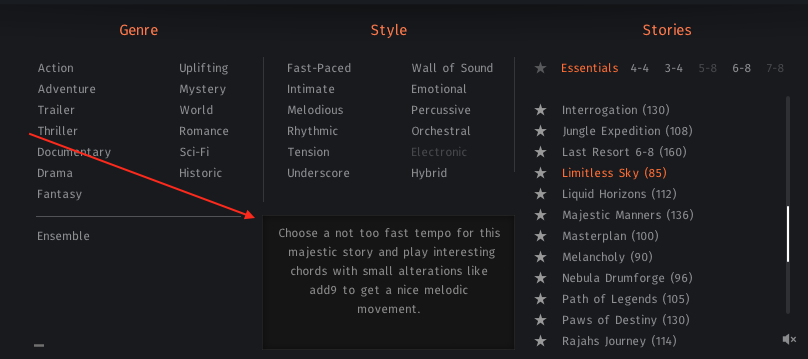
Positioned on the Find Page, you can access the Story Browser.
Each Story is categorized into different Genres and Styles. Simply click the Genre and Style you are searching for and see all Stories that fall under these categories.
At the bottom right you can see the speaker symbol. Clicking and dragging up will increase the Story preview volume and dragging down will lower the volume and at last mute the story preview function.
STORY BROWSER
TAGS
The Story Browser page contains 25 tags to help you filter all stories by different characteristics and keywords as well as an option to scroll through the filtered selection.
To simplify the search the tags are organized into three categories:
GENRE: These tags can be used to search for stories in the context of the various genres, which are typically associated with a certain style of music. This category can be used to additively filter for multiple tags.
STYLE: In general, all stories in THE SCORE ESSENTIALS are created with 11 styles in mind, applicable in different compositional scenarios.
ENSEMBLE: Utilizing the FREE MODE, these stories can be played freely without the engine (see 4.4.2.).
STORIES
- The Favorites button lets you filter by your cutom Story list. You can add Stories to this list by clicking the "star" icon next to each Story.
- Each Story was designed with a specific tempo in mind. This is indicated in the brakets. You can however try each story at different tempos.
- If a Story is designed in an odd meter this is also written into the Story name. If there is nothing specifically written about the meter, the Story is in 4/4.
- You'll find a short description of the selected Story with helpful tips in the dark box in the middle of the Find Page.



SETTINGS PAGE

On the settings page the dynamic controller can be mapped to CC01 or CC02.
You can also choose the octave where the key switches are located to better fit your MIDI hardware and playing style.
EXTERNAL MODE

With External Mode enabled, each slot of THE SCORE ESSENTIALS can be addressed individually using different MIDI channels. The External Mode bypasses the internal engine. Additionally, the octave shifts for each slot are disabled. Each Track in the DAW has to be routed back the THE SCORE ESSENTIALS Kontakt instance with each having a different MIDI channel corresponding with the slot number inside the engine (Track 1 = MIDI channel 1; Track 2 = MIDI channel 2; aso...).
SHAPE PAGE
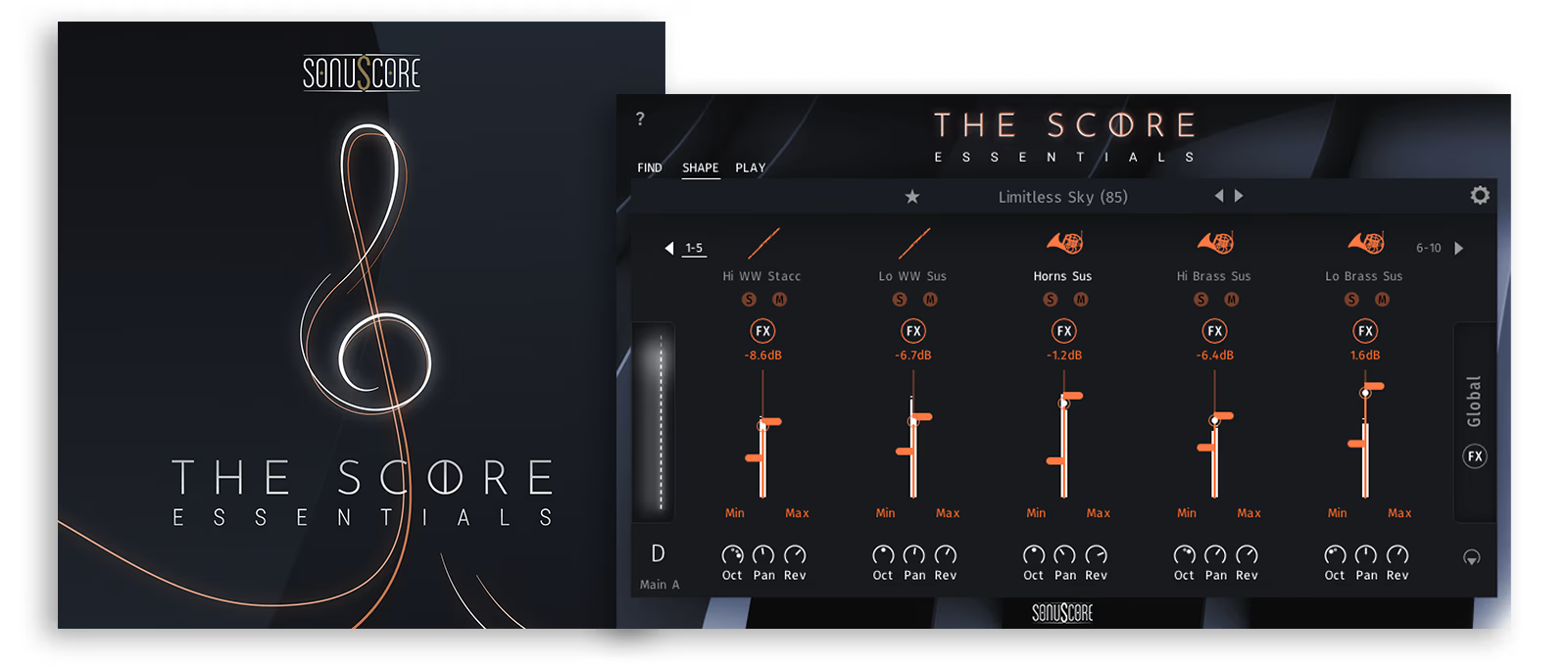
On the Shape Page you can adjust basic parameters for every slot as well as mix the overall sound. With the individual fader controls the balance between each layers is easily adjustable.

- Shows information about the currently visible page.
- By clicking the arrows left and right to the five slots you get access to the other five slots. Meaning the engine consists of ten individual slots in total.
Clicking on the instrument name at each slot will open the instrument browser (see 4.3.1.). - You can see the current value of the mod wheel displayed here.
- Solo and Mute functions for each slot as well as a specific FX Section for each slot (see 4.3.2.).
TIP:You can automate the Solo/Mute buttons to create even more variety. To automate the Mute button, go to the list of automatable parameters in your DAW and find the Mute parameters for the different slots. Now you can add them to your track and add automation points.
Alternatively, you can also right-click on the mute buttons in THE SCORE ESSENTIALS and select "Learn MIDI CC Automation". Then move a fader or knob on your MIDI controller or send a MIDI CC command from your DAW, for example CC2, and the button will be controlled by that MIDI CC. - Volume fader for each slot with adjustable min and max setting to react to the mod wheel.
- You can independently set the octave, panorama and the global reverb as a send effect. (Global Reverb Settings can be adjusted in the Global FX Section see 4.3.4.)
- Clicking here opens the Global FX Page.
- Route the instrument slots to different Kontakt outputs.
INSTRUMENT BROWSER

By double clicking on an instrument slot, a browser will guide you through the selection of an articulation. To quickly load articulations for the different slots, you can navigate through the slots by clicking on them above the browser view. You can delete the loaded instrument from the current slot by clicking on the “trash can” symbol on the bottom left. To exit the browser, click on the X on the upper left, or double click on your selected articulation. Greyed out articulations are only available in the full version of The Score. The „Load with default FX“-Button is active per default. If you want to keep your current FX settings for this slot you can deactivate the button and the default FX chain that comes with each instrument/articulation will not be loaded.
SLOT FX SECTION

- Overview over the FX chain for the slot. The first module is always Attack and Release as well as a three band Equalizer. The other three slots can be filled with numerous different FX modules (see 4.3.3..).
- Link icon: When activated you can link the slider to the mod wheel and decide where it should be at the min value of the mod wheel and where at the max value. Alternatively, you can link the slider to the LFO in the Global FX Section (see 4.3.4.).
- These are the different FX types that are available for each of the three slots.
You can also change the order of the three individual FX slots by dragging them to a different slot.
FX MODULES
SOUND MODULE
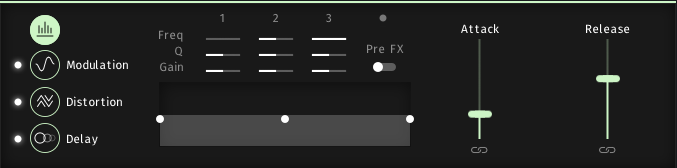
Attack: Adjusts the attack time for the loaded instrument.
Release: Adjusts the release time for the loaded instrument.
Please keep in mind that it is only possible to adjust the attack and release times in the first instance of any loaded instrument.
With the link button at the bottom you can link the attack and release slider to react to the mod wheel. The left handle represents the lowest position of the mod wheel while the right handle represents the highest position of the mod wheel. Alternatively, you can link the slider to the LFO in the Global FX Section (see 4.3.4.).
Right next to the Attack and Release controls you’ll find a three band EQ. Each band comes with three controls for Frequency, Volume und Q Factor. Additionally, you can decide whether you want to have the EQ before or right after the Channel FX Chain with this drop-down menu.
You can also use the visualization to adjust the frequency and the volume of the three band EQ. Simply drag one of the handles to the desired frequency and adjust the volume by dragging up and down.)
FILTER
This module lets you apply a filter to the instrument loaded to the slot.

You can choose between nine different filter types:
Low Pass -12dB
The State Variable (SV) filters have a clean characteristic that can be used for all kinds of audio signals. The LP2 is a 2- pole low-pass, which attenuates frequencies above the cutoff at a rate of -12 dB/octave.
Cutoff: Adjusts the frequency above which signals will be attenuated.
Resonance: With a value greater than 0, this control will boost a small frequency range around the cutoff frequency.
(Note: Each slider can be linked to react to the mod wheel or the LFO in the Global FX Section see 4.3.4.)
Low Pass -24dB
The State Variable (SV) filters have a clean characteristic that can be used for all kinds of audio signals. The LP4 is a 4- pole low-pass, which attenuates frequencies above the cutoff at a rate of -24 dB/octave.
Cutoff: Adjusts the frequency above which signals will be attenuated.
Resonance: With a value greater than 0, this control will boost a small frequency range around the cutoff frequency.
(Note: Each slider can be linked to react to the mod wheel or the LFO in the Global FX Section see 4.3.4.)
Low Pass Vintage
This is the same filter section that is provided by Native Instruments’ PRO-53 software synthesizer. It’s similar in nature to the 4-pole lowpass filter but has a different and more distinctive signature sound.
Cutoff: Adjusts the frequency above which signals will be attenuated.
Resonance: With a value greater than 0, this control will boost a small frequency range around the cutoff frequency.
(Note: Each slider can be linked to react to the mod wheel or the LFO in the Global FX Section see 4.3.4.)
High Pass -12dB
The State Variable (SV) filters have a clean characteristic that can be used for all kinds of audio signals. The HP2 is a 2- pole high-pass, which attenuates frequencies below the cutoff at a rate of -12 dB/octave.
Cutoff: Adjusts the frequency above which signals will be attenuated.
Resonance: With a value greater than 0, this control will boost a small frequency range around the cutoff frequency.
(Note: Each slider can be linked to react to the mod wheel or the LFO in the Global FX Section see 4.3.4.)
High Pass -24dB
The State Variable (SV) filters have a clean characteristic that can be used for all kinds of audio signals. The HP4 is a 4- pole high-pass, which attenuates frequencies below the cutoff at a rate of -24 dB/octave.
Cutoff: Adjusts the frequency above which signals will be attenuated.
Resonance: With a value greater than 0, this control will boost a small frequency range around the cutoff frequency.
(Note: Each slider can be linked to react to the mod wheel or the LFO in the Global FX Section see 4.3.4.)
Band Pass -12dB
The State Variable (SV) filters have a clean characteristic that can be used for all kinds of audio signals. The BP4 is a 4- pole band-pass, which attenuates frequencies above and below the cutoff at a rate of -12 dB/octave.
Cutoff: Adjusts the frequency above which signals will be attenuated.
Resonance: With a value greater than 0, this control will boost a small frequency range around the cutoff frequency.
(Note: Each slider can be linked to react to the mod wheel or the LFO in the Global FX Section see 4.3.4.)
Band Pass -24dB
The State Variable (SV) filters have a clean characteristic that can be used for all kinds of audio signals. The BP4 is a 4- pole band-pass, which attenuates frequencies above and below the cutoff at a rate of -24 dB/octave.
Cutoff: Adjusts the frequency above which signals will be attenuated.
Resonance: With a value greater than 0, this control will boost a small frequency range around the cutoff frequency.
(Note: Each slider can be linked to react to the mod wheel or the LFO in the Global FX Section see 4.3.4.)
Notch
The State Variable (SV) filters have a clean characteristic that can be used for all kinds of audio signals. The Notch 4 is a 4-pole notch filter, which attenuates frequencies at the cutoff.
Cutoff: Adjusts the frequency above which signals will be attenuated.
Resonance: With a value greater than 0, this control will boost a small frequency range around the cutoff frequency.
(Note: Each slider can be linked to react to the mod wheel or the LFO in the Global FX Section see 4.3.4.)
Talk
This is a formant filter type. Formants are acoustic resonances. The term often applies to the phonetics of human speech, as such, the formant filters are designed to mimic the frequency response of the human vocal tract. These filters can be used to emulate the “talk box” effect.
Talk: Controls the frequency response of the filter. Can be used to morph between vowel-sounds.
Resonance: Increases and decreases the peaks and notches in the response respectively, analogous to the resonance control of the other filters.
Size: Controls the center of the frequency response, analogous to the cutoff control of the other filters.
(Note: Each slider can be linked to react to the mod wheel or the LFO in the Global FX Section see 4.3.4.)
DYNAMICS
This module lets you process the dynamics of the instrument loaded to the slot.

Supercharger GT
The Supercharger GT offers high-end tube compression emulation, inspired by boutique hardware. It is a particularly musical compressor, with different flavors of saturation and spectral shaping that allow you to apply subtle harmonic and spatial enhancement as well as heavy and aggressive tube drive.
Input: Adjusts the input gain to the compressor in dB.
Saturation: Applies saturation to the signal. Turn the control right to apply more saturation to the signal.
Output: Sets the output level of the compressor in dB. You can use it as a make-up gain control that allows you to bring the output signal up to the same peak level as the input signal after compression.
(Note: Each slider can be linked to react to the mod wheel or the LFO in the Global FX Section see 4.3.4.)
Compressor
Compressors are dynamic tools which automatically reduce the level of loud passages in a signal, thereby affecting the signal’s dynamic range. The Solid Bus Comp is modeled after a classic analog bus compressor.
Threshold: Sets a level threshold above which the compressor starts working. Only levels that rise above this threshold will be reduced by the compression; signals that stay below it will be left unprocessed.
Ratio: Controls the amount of compression, expressed as a ratio of “input level change” against “output level change”. A Ratio of 1:1 means that no compression will be happening. For example, a Setting of 4 represents the ration 4:1, which means for every 4 decibel increase of amplitude above the threshold, the output will increase by only 1 decibel.
(Note: Each slider can be linked to react to the mod wheel or the LFO in the Global FX Section see 4.3.4.)
Transient Master
The Transient Master is an easy to use compressor designed to control the attack and sustain of a sound. Instead of following the amplitude of the sound like a traditional compressor, it follows the general envelope and is thus not as susceptible to changes of input gain. It is best used on sounds with fast attacks, like percussion, pianos or guitars. The Transient Master can also be quite extreme in some cases, so use it with caution.
Input: Controls the input gain to the effect.
Attack: Adjusts the scaling of the attack portion of the input signal’s volume envelope. Turning the knob right (0% to 100%) will add more punch, and turning the knob left (0% to -100%) will reduce sharp attacks.
Sustain: Controls the scaling of the sustain portion of the input signal’s volume envelope. Increasing this parameter will add more body to the sound and decreasing it will reduce the sound’s tail.
(Note: Each slider can be linked to react to the mod wheel or the LFO in the Global FX Section see 4.3.4.)
Limiter
Limiters are actually a special form of compressors with a ratio of one to infinity, a threshold just below the maximum level, and a very short attack time. They act as a “safety net” to keep short signal peaks from overloading the system, which would result in audio clipping. While compressors have a range of artistic applications, limiters are usually used for technical reasons — they can tame signals with peaks which would otherwise overload the output, without requiring you to turn the signal’s overall volume down.
Input: Sets the gain of the input signal. The Limiter is different from the Compressor in that it has a fixed threshold; to achieve a sensible peak reduction, use this control to adjust the input gain until you see the Attenuation meter responding only to occasional level peaks.
Release: Just like the Compressor’s control of the same name, this knob adjusts the time it takes the Limiter to return to an unprocessed signal after the input level falls below the threshold.
Output: Adjusts the module’s output level.
(Note: Each slider can be linked to react to the mod wheel or the LFO in the Global FX Section see 4.3.4.)
Distortion
This module lets you saturate and distort the instrument loaded to the slot.

Tape Saturation
This module causes distortion by clipping or rounding off high sample values. It thereby simulates the behavior of overloaded tube circuits, adding artificial harmonics to a sound.
Gain: Controls the input gain of the effect. This will increase the amount of tape distortion and compression.
Warmth: Controls the low frequency boost/cut of the effect.
Output: Controls the output gain of the effect.
(Note: Each slider can be linked to react to the mod wheel or the LFO in the Global FX Section see 4.3.4.)
Tube Saturation
The Tape Saturator emulates the soft compression and distortion of recording to tape. It can be used lightly to add warmth and coloring to the sound, or heavily to add aggressive distortion.
Drive: Adjusts the amount of distortion.
Damping: Turning this knob clockwise attenuates high frequencies in the output signal, thereby counteracting the brightness caused by the artificial harmonics.
Output: Adjusts the module’s output level. Since distortion boosts the gain considerably, it’s often necessary to attenuate the signal at the output stage.
(Note: Each slider can be linked to react to the mod wheel or the LFO in the Global FX Section see 4.3.4.)
Black Distortion
Black Distortion simulates a guitar distortion pedal, ideal for blues and rock tones.
Distortion: Controls the amount of distortion applied.
Filter: For a darker sound, turn clockwise to enhance the low fre quency range; turn counter-clockwise for a brighter, sharper sound.
Volume: The master volume control for the effect.
(Note: Each slider can be linked to react to the mod wheel or the LFO in the Global FX Section see 4.3.4.)
Clean Amp
Clean Amp simulates the rich tube sound of classic guitar amps from decades ago. It’s ideal for screaming leads and crunchy rhythm guitar sounds, as well as clean sounds with personality.
Gain: Adjusts the input level, or gain. Turning Gain to the right adds saturation and distortion to the signal.
Bass & Treble: These controls adjust the respective levels of the signal’s high and low frequency components.
(Note: Each slider can be linked to react to the mod wheel or the LFO in the Global FX Section see 4.3.4.)
Bitcrusher
Bitcrusher adds various digital artifacts, like quantization noise or aliasing, to a clean signal. It’s great for roughing up sounds that would otherwise be too plain and featureless.
Bits: Re-quantizes the signal to an adjustable bit depth.
s. Rate (Sample Rate): Resamples the signal to an adjustable sample rate. The resampling is done without any kind of (usually mandatory) low-pass filtering, which causes all kinds of wonderful aliasing arti- facts.
(Note: Each slider can be linked to react to the mod wheel or the LFO in the Global FX Section see 4.3.4.)
Overdrive
Overdrive is an emulation of a classic guitar distortion effect pedal.
Drive: Adds dirt to the sound.
Tone: Turning this control clockwise accents the midrange while dropping the bass. Counterclockwise takes off the highs and boosts the bass for a warmer sound.
Output: Adjusts the module´s output level.
(Note: Each slider can be linked to react to the mod wheel or the LFO in the Global FX Section see 4.3.4.)
DELAY
This module lets you delay the signal of the loaded instrument in the slot.

Tape Delay
The Tape Delay reproduces the sound of tape delay, modelled on the physical mechanisms that make up early tape machines.
Time: Adjust the delay time. You can toggle between setting the time in milliseconds or synced to your host tempo by clicking the clock/note symbol.
Feedback: Adjusts the amount of feedback. Turning Feedback to the right increases the amount of delay repetitions.
Mix: Adjusts the respective levels of the original and processed signals. In common scenarios, the delayed signal is mixed in at a lower level than the direct signal.
(Note: Each slider can be linked to react to the mod wheel or the LFO in the Global FX Section see 4.3.4.)
Diffuse Delay
Diffusion mode can produce a standard delay effect, but it is best used for its huge, diffusion-based reverb sound. This mode is ideal for ambient music and sound design.
Time: Adjust the delay time. You can toggle between setting the time in milliseconds or synced to your host tempo by clicking the clock/note symbol.
Feedback: Adjusts the amount of feedback. Turning Feedback to the right increases the amount of delay repetitions.
Mix: Adjusts the respective levels of the original and processed signals. In common scenarios, the delayed signal is mixed in at a lower level than the direct signal.
(Note: Each slider can be linked to react to the mod wheel or the LFO in the Global FX Section see 4.3.4.)
Analogue Delay
The Analogue Delay offers a Bucket Brigade delay model that replicates the character sound of BBD chips.
Time: Adjust the delay time. You can toggle between setting the time in milliseconds or synced to your host tempo by clicking the clock/note symbol.
Feedback: Adjusts the amount of feedback. Turning Feedback to the right increases the amount of delay repetitions.
Mix: Adjusts the respective levels of the original and processed signals. In common scenarios, the delayed signal is mixed in at a lower level than the direct signal.
(Note: Each slider can be linked to react to the mod wheel or the LFO in the Global FX Section see 4.3.4.)
Digital Delay
Clean Digital Delay without coloration.
Time: Adjust the delay time. You can toggle between setting the time in milliseconds or synced to your host tempo by clicking the clock/note symbol.
Feedback: Adjusts the amount of feedback. Turning Feedback to the right increases the amount of delay repetitions.
Mix: Adjusts the respective levels of the original and processed signals. In common scenarios, the delayed signal is mixed in at a lower level than the direct signal.
(Note: Each slider can be linked to react to the mod wheel or the LFO in the Global FX Section see 4.3.4.)
Psyche Delay
Psyche Delay is a stereo delay effect that produces a range of atmospheric ambient echoes and reverse effects reminiscent of the "backwards tape" sound of the 1960s.
Time: Adjust the delay time. You can toggle between setting the time in milliseconds or synced to your host tempo by clicking the clock/note symbol.
Feedback: Adjusts the amount of feedback. Turning Feedback to the right increases the amount of delay repetitions.
Detune: Fine-tunes the pitch of the echo repeats in the range of -50 to +50 cents.
Mix: Adjusts the respective levels of the original and processed signals. In common scenarios, the delayed signal is mixed in at a lower level than the direct signal.
(Note: Each slider can be linked to react to the mod wheel or the LFO in the Global FX Section see 4.3.4.)
MODULATION
This module lets you delay the signal of the loaded instrument in the slot.

Chorus
Choruses are used to enrich sounds by adding spatial movement and giving them an ensemble-like quality. They are based on short delays, with built-in modulation of the delay time. The delays produce copies of the original sound that vary in timing and, as a side-effect of the delay time modulation, pitch. This way a chorus adds space and body to the sound as if it was played from multiple sources at the same time. The results range from subtle shifts in timbre to extremely lively textures with a wide stereo image.
Rate: Adjusts the speed of modulation, from slow pitch changes to fast vibratos. This becomes more pronounced as the amount is increased.
Depth: Adjusts the range of modulated detuning. Higher values give a more pronounced chorusing effect.
Mix (Dry/Wet Knob): Adjusts the respective levels of the original and processed signals. Note that the typical chorus effect is created by the combination of both signals, so setting this knob to the midpoint results in the most pronounced effect.
(Note: Each slider can be linked to react to the mod wheel or the LFO in the Global FX Section see 4.3.4.)
Flanger
The Flanger splits the audio signal up and delays one version in relation to the original signal. By modulating the delay time, as well as feeding an adjustable amount of the output signal back into the input, the Flanger creates a characteristic “whooshing” sound.
Speed: Adjusts the LFO speed. To synchronize the speed to your host or Master Editor tempo, click the Sync Button.
Depth: The amount of LFO modulation. Higher values cause the flanging effect to sweep over a wider range.
Mix (Dry/Wet Knob): Adjusts the respective levels of the original and processed signals. Note that the typical chorus effect is created by the combination of both signals, so setting this knob to the midpoint results in the most pronounced effect.
(Note: Each slider can be linked to react to the mod wheel or the LFO in the Global FX Section see 4.3.4.)
Phaser
The Phaser effect continually changes the phase relationships in your signal with an all-pass filter. This results in a comb filtering effect, which attenuates some frequencies while boosting others.
Speed: The LFO modulation speed. To synchronize the speed to your host or Master Editor tempo, click the Sync Button.
Depth: The amount of LFO modulation. Higher values cause the Phaser effect to sweep over a wider frequency range.
Mix (Dry/Wet Knob): Adjusts the respective levels of the original and processed signals. Note that the typical chorus effect is created by the combination of both signals, so setting this knob to the midpoint results in the most pronounced effect.
(Note: Each slider can be linked to react to the mod wheel or the LFO in the Global FX Section see 4.3.4.)
Flutter
Flutter emulates the sound of analog tape machines, characterized by wow and flutter, saturation, noise, and a limited high-frequency response. You can use it to apply classic lo-fi effects, particularly when playing sustained notes, pads and melodies.
Scrape: Adjusts the amount of high-frequency scraping, which occurs when the tape vibrates as it passes over the playback head.
Wow: Adjusts the amount of wow, a slow fluctuation in pitch caused by sticky tape and worn-out tape transport.
FlutterAdjusts the amount of flutter, a fast fluctuation in pitch caused by a bent capstans and faulty motor parts.
Mix: Blends between the input signal and the effect signal.
(Note: Each slider can be linked to react to the mod wheel or the LFO in the Global FX Section see 4.3.4.)
Vibrato
Vibrato/Chorus models the sound of the vibrato and chorus effects found on a classic electric organ. The effects were originally produced by an innovative circuit that combined electronic and mechanical components, producing an incredibly rich sound.
Speed: Adjusts the frequency of the modulation.
Blend: Blends between the vibrato and the chorus effect.
Width: Adjusts the width of the stereo widening effect.
Mix: Blends between the input signal and the effect signal.
(Note: Each slider can be linked to react to the mod wheel or the LFO in the Global FX Section see 4.3.4.)
REVERB
This module lets you reverberate the signal of the loaded instrument in the slot.

Plate Reverb
Plate reverb was developed as an early method of generating an artificial reverb effect. A vibrating sheet of metal is employed to simulate reflection patterns in acoustical spaces. Since the sheet of metal vibrates across a two- dimensional plane, the echo density is higher and more evenly distributed than in a three-dimensional space. It is a good choice if you want to brighten a sound source. Plate reverb has a smooth reverb tail, allowing you to lengthen a sound without pushing it back in the mix. For this reason plate reverbs are most commonly used on vocals and snare drums.
Pre Delay: Introduces a short amount of delay before the reverb takes effect.
Decay: Adjusts the duration of the reverb effect.
Mix Blends between the input signal and the effect signal.
(Note: Each slider can be linked to react to the mod wheel or the LFO in the Global FX Section see 4.3.4.)
Reverb
This is an algorithmic hall reverb.
Time: Adjusts the duration of the reverb effect.
Damping: Adjusts the amount of absorption in the room simulated by the reverb effect. Higher values result in more absorption.
Mix Blends between the input signal and the effect signal.
(Note: Each slider can be linked to react to the mod wheel or the LFO in the Global FX Section see 4.3.4.)
Raum
Raum is a reverb algorithm for airy halls.
Time: Adjusts the duration of the reverb effect.
Modulation: Adjusts the amount of movement added to the reverb sound by changing internal parameters of the reverb over time. Turning the control to the right changes the movement of the reverb from lush to strongly detuned sounds.
Damping: Adjusts the amount of absorption in the room simulated by the reverb effect. Higher values result in more absorption.
Mix Blends between the input signal and the effect signal.
(Note: Each slider can be linked to react to the mod wheel or the LFO in the Global FX Section see 4.3.4.)
GLOBAL FX SECTION
COMPRESSOR
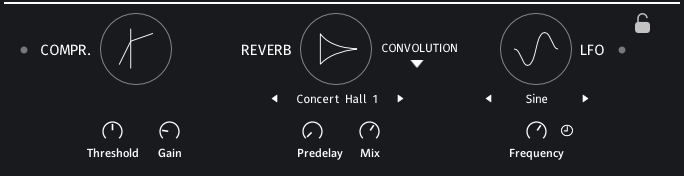
Compressors are dynamic tools which automatically reduce the level of loud passages in a signal, thereby affecting the signal’s dynamic range. This Solid Bus Comp is modeled after a classic analog bus compressor.
Threshold: Sets a level threshold above which the Compressor starts working. Only levels that rise above this threshold will be reduced by the compression; signals that stay below it will be left unprocessed.
Gain: Controls the output gain of the compressed signal. Used to compensate for the gain reduction of the effect.
REVERB
Convolution
This Convolution Reverb comes with ten different impulse responses to choose from.
Predelay Introduces a short amount of delay before the reverb takes effect.
Mix Blends between the input signal and the effect signal.
Plate Reverb
Plate reverb was developed as an early method of generating an artificial reverb effect. A vibrating sheet of metal is employed to simulate reflection patterns in acoustical spaces. Since the sheet of metal vibrates across a two- dimensional plane, the echo density is higher and more evenly distributed than in a three-dimensional space. It is a good choice if you want to brighten a sound source. Plate reverb has a smooth reverb tail, allowing you to lengthen a sound without pushing it back in the mix. For this reason plate reverbs are most commonly used on vocals and snare drums.
Time: Adjusts the duration of the reverb effect.
Predelay: Introduces a short amount of delay before the reverb takes effect.
Mix Blends between the input signal and the effect signal.
Raum
Raum is a reverb algorithm for airy halls.
Time Adjusts the length of the decay time.
Predelay Introduces a short amount of delay before the reverb takes effect.
Decay Adjusts the duration of the reverb effect.
Hall
This is an algorithmic hall reverb.
Time Adjusts the length of the decay time.
Predelay Introduces a short amount of delay before the reverb takes effect.
Decay Adjusts the duration of the reverb effect.
LFO
You can modulate the various slot FX sliders via this LFO.
You can choose between Sine, Rectangle, Triangle and Sawtooth waveforms and adjust the frequency either in ms or with clicking the clock icon in sync to the host tempo at a desired note value.
To link an effect to the LFO follow these steps:
Activate the link function by clicking the chain symbol beneath the slider you want to link to the LFO.

PLAY PAGE
On the Play Page you’ll find the heart of our ensemble engine. Here you can adjust everything concerning the arps and envelopes for each instrument.

- Indicates the currently shown bar and lets you switch to the other bars, if 1, 2 or 4 bars are chosen.
- Undo & Redo
- Access the Chord Studio Lite.
- Arrows to switch between slots 1-5 and 6-10.
- The global accents can be switched on and off via the check button. If turned on each slot can be linked to the global accents via the chain link symbol right next to the solo/mute section beneath each instrument slot (see 4.4.1.).
- Shows the currently selected key switch. Each Story contains 2 key switches: C0 Intro, D0 Main A. You can adjust the position of the key switches in the settings menu. The full 5 key switches including E0 Main B, F0 Outro, G0 Ending, are available in The Score.
- Copy and paste the content to the other keyswitch.
- Global length settings:
• The available meters are 4/4, 3/4, 6/8, 5/8, 7/8.
• Bar length can be chosen between 1 Bar, 2 Bars and 4 Bars.
• half time, normal time and double time switch. Depending on the host tempo you can set the engine to play in half or double time. Per default this is set to 1:1 so the engine plays exactly the chosen tempo in your DAW.
GLOBAL ACCENTS
This handy tool can easily apply a cohesive rhythmic feel to an entire story. With the chain symbol right next to each instrument slot you can link the instruments to follow the global accents. The individual slot linked to the global accent will automatically have a slightly lower dynamic range, but the accents are added to the rhythm were they apply.
That way you can set two kinds of global accents.

With the first click into an empty circle you’ll get a more profound accent.

Clicking again will give you a softer accent and clicking once more will turn the accent off again.

ARPEGGIATOR
Short articulations always use the arpeggiator. Click at the slot with the loaded short articulation on the play page to enter the editor.
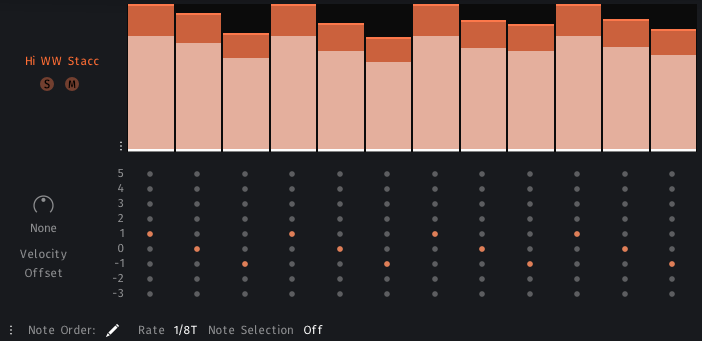
At the top of the arpeggiator module you can create your own rhythms or dynamic progression of the arpeggiation.
Click at the top of each step to drag the max value of each step (mod wheel at 127) to the desired dynamic level. Click at the bottom of each step to drag the min value of each step (mod wheel at 0) to the desired dynamic level.
Note that you can also inverse the dynamic behavior by dragging the min value above the max value. When the mod wheel is at 0 it will play at a louder dynamic then when the mod wheel is at 127. This way you can create interesting movements between different slots where one element is more preset in a lower dynamic range as compared to when it is in a higher dynamic range.
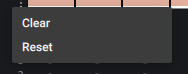
With the menu located at the bottom left of the velocity steps you can set all of the steps to zero with the clear function to easily mute a slot in a keyswitch. Der Reset button sets all steps to the max velocity.
At the bottom of the arpeggiator module you can find the general controls:

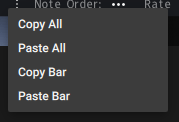
1. Click on the three dots to easily copy the entire slot or just the current bar to a different instrument or key switch.
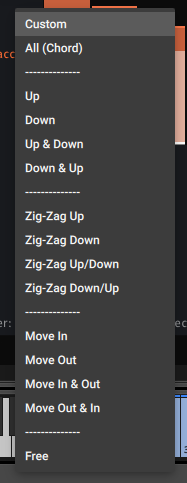
2. The Note Order determains how the arpeggiater works with the incoming midi data.
- Custom: The dot matrix becomes active and you can programm a custom arpeggiation pattern. 0 represents the lowest pressed midi note. 1 represents the second pressed midi note aso.
- All (Chord): All pressed midi notes are played simultaneously according to the set steps and their velocity.
- Arp Pattern: These 12 arp pattern are the basic pattern found in many arpeggiators.
- Free: The Free Mode bypasses the arpeggiator and the instrument will only be played whenever a new midi input is send to this slot. This offers many possibilities in terms of orchestration.

3. The rate determains the smallest rhythmic unit that the arpeggiator uses. You can choose between rates from 1/4T to 1/32.
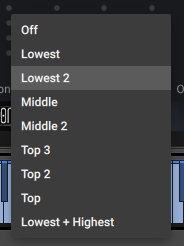
4. The Note Selection determains which notes will be passed on to this slot.

5. The depth of control is dependend on the other settings in the Arpeggiator.
Note Order = All (Chord) - only the Octave settings are available.
Octave: After playing a chord in the initial octave the chord will be played one octave higher. If set to +2 the chord will be played a third time again one octave higher aso. -1 will repeat the chord one octave lower etc.
Note Order = Up, Down aso. - three settings are available:
Octave: You can also choose to repeat the sequence through the octaves, as explained above.
Repeat: You can also choose to repeat each note more than once. Repeat = 1 will repeat each step one additional time.
Reset: Reset will restart the sequence after one or two bars.
CUSTOM SEQUENCE MODE

With the Custom Sequence Mode, you can even customize the pitch sequence of each step within a rhythmic sequence via clicking at the respective point within the matrix:
Rows: Numeric order of the played notes from bottom to top. The lowest note you play has the value 0, the second lowest note has the value 1 and so on. This also works in the negative direction. If you play for example C-Major, the pitch distribution within the Sequence Customizer would be like that:
0 = C1, 1 = E1, 2 = G1, 3 = C2, 4 = E2, 5 = G2, -1 = G0, -2 = E0, -3 = C0
Columns: Display of the steps and their velocities. This allows you to precisely customize the sequences of notes within the played material and thus pre-design even more realistic passages.
It is also possible to select more than one note per step. This offers rich possibilities for your voicings and arrangements.
To better balance each step against the other you can adjust and offset for each step in the positive or negative way to either make a note louder compared to the other voices or quieter.
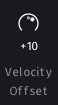
The step you want to edit must be selected, then you can set the offset for this step.
This especially comes in handy when programming more complex rhythms with the percussion instruments, because there are multiple instruments available combined in one slot. Keep in mind that absolute values are set in drum mode.
ENVELOPE

The Envelope allows you to set a recurring dynamic shape to sustained notes. The centerpiece is the envelope shape, which can be drawn freely by left-clicking and dragging the mouse. By holding “alt” while doing so you can delete steps. Holding “shift” allows you to scale all min or max values of the envelope by dragging the mouse up and down.
At the top of the envelope module you can create your own dynamic progression of the envelope.
Click at the top of each step to drag the max value of each step (mod wheel at 127) to the desired dynamic level. Click and drag horizontally lets you edit an envelope quite well.
Click at the bottom of each step to drag the min value of each step (mod wheel at 0) to the desired dynamic level. (Note that you can also inverse the dynamic behavior by dragging the min value above the max value. When the mod wheel is at 0 it will play at a louder dynamic then when the mod wheel is at 127. This way you can create interesting movements between different slots where one element is more present in a lower dynamic range as compared to when it is in a higher dynamic range.)
At the bottom of the envelope module you can find the general controls for several functions.
Note Selection: Selects whether or not all played notes should be heard in this particular module. The different options allow to only play specific notes of a played chord. This can be used to prevent a muddy bass section and orchestrate chords carefully with multiple instruments.
The following options are available:
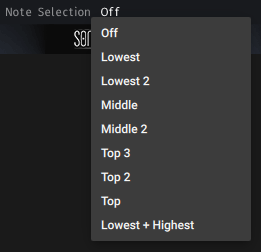
- Off: No note selection is applied so all played notes will be used for the arpeggiation.
- Lowest: Only the lowest note will be used for the arpeggiation.
- Lowest 2: The two lowest notes will be used for the arpeggiation.
- Middle: In a three voiced chord only the middle note will be used for the arpeggiation. If you only play two voices at a time the middle note will use the lowest note for the arpeggiation in this case.
- Middle 2: In a four voiced chord the middle two notes will be used for the arpeggiation. If you play a three voiced chord the highest and middle note will be used for the arpeggiation.
- Top 3: The highest three notes will be used for the arpeggiation.
- Top 2: The highest two notes will be used for the arpeggiation.
- Top: The highest note will be used for the arpeggiation.
- Lowest + Highest: Only the lowest and highest note will be used for the arpeggiation.
Note Order - Two options are available:
- All (Chord): All notes depending on the Note Selection are routed to the envelope.
- Free: In the free mode the dynamics of the sustained notes are controlled by the modwheel. The envelope with its settings is bypassed, but the Note Selection is still applied.
You can use key modifiers to make your life easier editing the the envelope:
- ALT+click - To reset an envelope step.
- SHIFT+click - To alter all steps of the current bar.
- CMD/CTRL+click - To have stepped values for each envelope step.
CHORD STUDIO LITE
Chord Studio Lite is a stipped down version of the Chord Studio included in The Score.

The Jam Station has a specific chord selection individually curated for each story. This is a great starting point to explore new genres and different stories.
Simply click one of the chord symbols to start the playback. To change the played chord simply select a different chord. The end the playback, click on the currently selected chord again to de-select it.
If you like a chord selection and want to use it in a different story, simply lock the chord selection by clicking the lock symbol to the right.
TIPS & TRICKS
GENERAL TIPS
- Play Simple Chords for Maximum Impact: Like with THE SCORE, all stories are optimized for simple chord progressions that you can play with your right hand only. Hold chords or single notes for long enough time to unlock the full potential of the multi-layered arrangements, ensuring a rich and dynamic sound.
- Use the Mod Wheel: The mod wheel is your key not only to dynamic expression, but to explore the nuances and different stages of the predesigned arrangements. Keep your left hand on the mod wheel for fluid transitions while playing with your right hand.
- Switch Song Parts Seamlessly with Key Switches: Use key switches to jump between Intro and the Main A section on the fly. This functionality is perfect when you’re sketching ideas for a new composition.
- Combine Stories and the Ensemble Stories: For ultimate versatility and detailed results, blend the multi-layered Stories with the Ensemble Stories. This approach lets you layer custom elements on top of the preset arrangements, providing both speed and precision in your workflow.
- Adjust Parameters for Unique Sounds: Dive into the individual parameter controls to tweak the Stories and make the arrangements your own. Change instruments, octaves and effects on the Shape page, experiment with the predesigned steps, arpeggios, and other functions of the individual slots on the Play page. Enjoy how quick and easy you can change whole arrangements and soundscapes with only a few adjustments.
CREDITS
Product Concept and Design: SONUSCORE: Tilman Sillescu, Andreas Hammann, Jonas Meyer, Stefan Kemler, Lukas Ruschitzka, Simon Schrenk
Project Lead: Tilman Sillescu, Stefan Kemler
Recording: David Christiansen, Christian Wirtz, Simon Schrenk, Olajide Paris
KONTAKT Scripting: Jonas Meyer, Stefan Kemler, Mathias Vatter, Nico Dilz
NKS Integration: Stefan Kemler
Preset Design: Tilman Sillescu, Jonas Schüsselin, Jonas Hausotter, Matthias Meeh, Christian Wirtz, Simon Schrenk, Lukas Ruschitzka
Marketing: Benedikt Huster, Tobias Kunz, Felix Moebius, Louisa Wolf, Nadja Demmler, Zoé Friedbacher, Russ Hughes
Web Programming: Lukas Ruschitzka
Videos: Nadja Demmler, Tilman Sillescu
Additional Content: Tilman Sillescu, Nicolai Patricio, Simon Schrenk